
The styles
| Style | Strengths | Good to know |
|---|---|---|
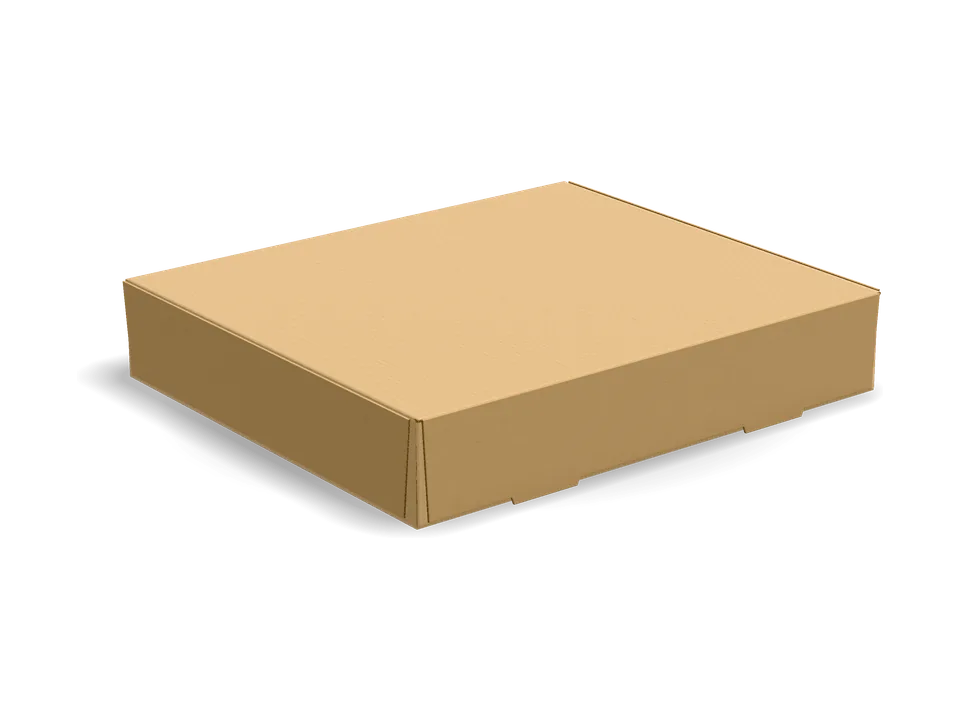
| Square with rolled walls | The most common: no glue needed, reinforced corners, stackable. | Single or double front wall, with tabs that lock the base. |
| Square with glued flaps | Ships ready to set up, with a locking lid. | Requires gluing at the factory. |
| Beveled corners, octagonal | Closer to round: less board, distinctive look. | More folds, slightly longer to set up. |
| Hexagonal | Distinctive silhouette, good rigidity. | Proportions are set by the shape. |
| Single-slice box | Holds a 1/8 slice, ideal for selling by the slice. | Fixed angle: the depth follows the width. |
| Cone, tray | Held in the hand or served open. | For eating on the spot. |
The board
Microflute (E-flute) is the most popular choice: it insulates a little, stays rigid and prints well. Large sizes may call for a thicker flute. For a single slice or a cone, paperboard is enough. In every case, the board in contact with the pizza must be suitable for food contact: ask your supplier for the compliance certificate.
The right size
Start from the pizza’s diameter and add clearance so it can be lifted out without damage, usually anywhere from a few millimeters to a centimeter. The inside height must exceed the thickness of the topped pizza, without leaving so much air that the pizza cools down.
Details that make the difference
- A notch or thumb hole so the lid opens without fumbling.
- A window in the lid to show off the pizza in a display case.
- The artwork on the lid: it’s the panel customers see at delivery and in photos.
- Stacking: a flat lid and reinforced corners keep the stack from getting crushed.