
The order of dimensions
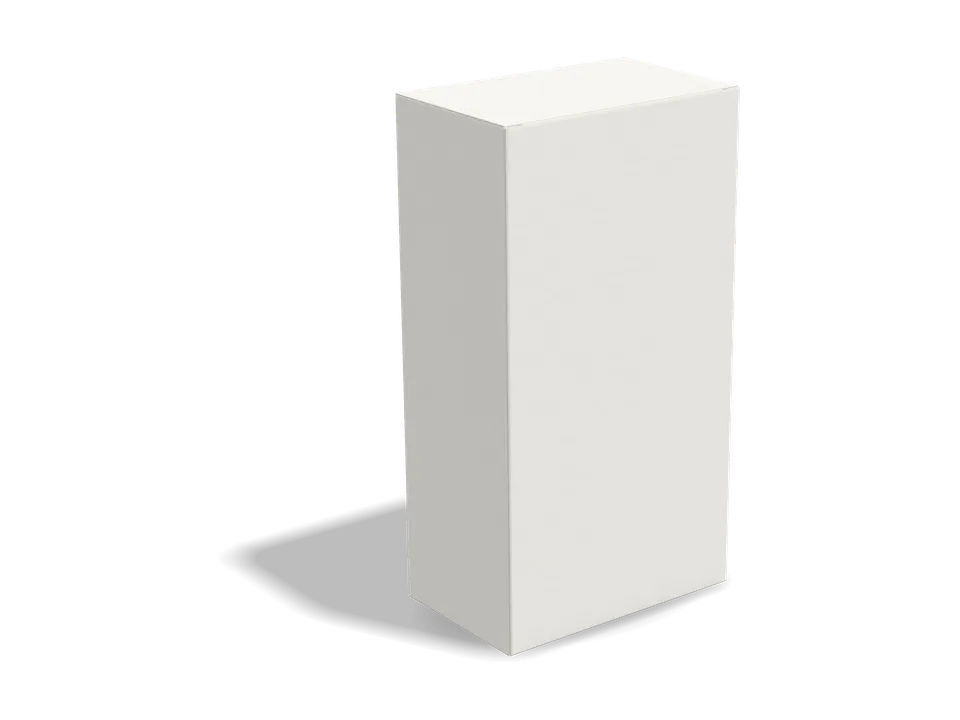
Dimensions are always given in the same order: length × width × height (L × W × H). Length and width describe the opening or the base; height is the perpendicular dimension. On a folding carton, the opening is at the top; on a pizza box or a mailer box, height is the smallest dimension.
Three ways to measure
| Dimensions | What they measure | When to use them |
|---|---|---|
| Inside | The space available for the product. | Almost always: the product decides. |
| Outside | The overall size of the closed box. | When the box has to fit into a shipping carton, on a shelf or in a machine. |
| Manufacturing | The distance between fold lines, as drawn on the dieline. | For the die maker and the printer. |
The difference between these measurements depends on the board thickness: roughly one to two thicknesses per dimension, depending on the box style. With paperboard (0.4 to 0.6 mm) it stays small; with microflute (1.5 mm) it already matters; with double-wall board (6 mm) it changes the size significantly.
Clearance: a few millimeters that matter
A box made to the exact dimensions of the product holds it too tightly: you have to force the product in and the corners get crushed. So you add clearance of 1 to 3 mm per dimension depending on the product (more for a soft product or one packed in a pouch, less for a bottle that shouldn’t move).
On boite.ma
The editor accepts all three modes: you enter inside, outside or manufacturing dimensions, and it recalculates the dieline for the thickness of the material you choose. If you start from your product’s dimensions, Find my template adds the clearance and suggests the box styles that fit it.